Using biodiversity data for long-term IAS management: Highlights from Living Data 2025
Living Data 2025 took place between 21 and 24 October 2025 in Bogota, Colombia and brought together biodiversity networks, researchers, and practitioners worldwide to advance standards, promote interoperability, and measure progress towards conserving and restoring biodiversity.
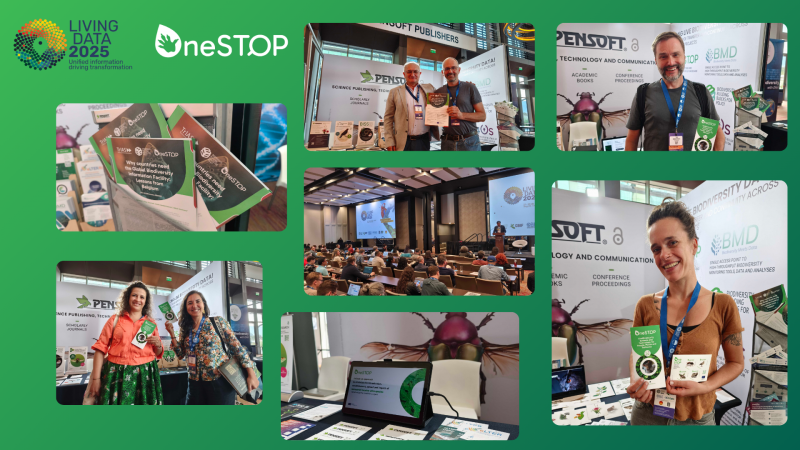
During the event, OneSTOP was featured at Pensoft Publishers’ booth, where visitors learned more about the project and its activities. The booth welcomed numerous visitors and displayed promotional materials.
On the second day of the conference, OneSTOP was highlighted in ‘Long Live Biodiversity Data: Knowledge Transfer and Continuity Across Research Projects’. During his presentation, the project’s coordinator, Quentin Groom (Meise Botanic Garden), explored how research data can remain impactful beyond project lifespans through open data, effective science communication and international collaboration. He also pointed out the importance of open infrastructure and how the longevity of Horizon Europe projects can be prolonged by establishing communities. As an example, Dr Groom referred to the community of projects tackling IAS management, namely TrIAS, OneSTOP and GuardIAS. A recording of the session can be watched here.
The next panel OneSTOP contributed to was entitled ‘Invasive alien species data: state of the art, challenges and a way forward’. The session featured presentations on IAS management by multiple OneSTOP partners, such as Lien Reyserhove (INBO), Quentin Groom (Meise Botanic Garden), and Cristina Preda (Ovidius University of Constanța).
During that session, Lien Reyserhove touched upon the subject of sharing data on IAS, especially species occurrence data and presented a survey currently deployed by INBO.
In the following presentation, Quentin Groom focused on how to upscale reproducible open workflows for invasive species checklists. Introducing the main pillars of OneSTOP, Dr. Groom outlined the workflows that the project aims to develop. Moreover, he explained why checklists for invasive species are important and how they contribute to minimising the impact of IAS.
Another presentation focused on the case of Romania, one of the countries where a OneSTOP Living Lab has been established. Christina Preda explained how IAS are addressed in that country and what are the next steps planned for minimising their impact.
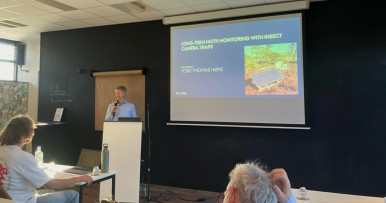
The session ended with a presentation introducing methods for alien species detection, including CamAlien, and explained how the CamAlienViewer tool contributes to more effective IAS management in Europe.
A recording of the session is available here