New factsheet shows how OneSTOP’s Living Labs test new technologies for detection of invasive species
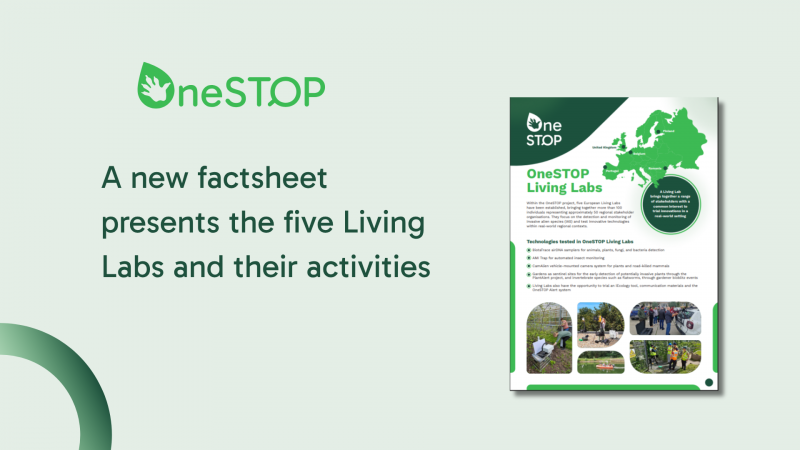
OneSTOP’s latest factsheet presents how its five Living Labs bring together different stakeholders to trial new tools for detecting and monitoring invasive alien species.
The Living Labs, established by the project in Romania, Portugal, the UK, Belgium and Finland, are trialling different technologies such as:
-
BiotaTrace airDNA samplers, which detect animals, plants, fungi and bacteria from DNA in the air;
-
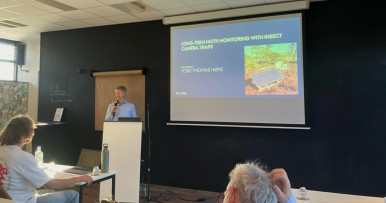
AMI Trap, which is used for automated monitoring of nocturnal insects;
-
CamAlien, a vehicle-mounted camera system that records plants and road-killed mammals.
Each Living Lab offers real-world conditions with its own climate, landscape and risk profile. Moreover, the different Living Labs ensure that technologies are tested in various regional contexts. For example, the Portuguese Living Lab faces risks from a marine port, rail and road networks, and rural depopulation that is increasing land abandonment, while the UK one faces risks from pathways such as canals, horticulture and captive exotic animals. In parallel, the Romanian Living Lab covers a coastal region with a marine port, and the Finnish and Belgian Living Labs operate in areas shaped by international trade.
Learn more about the similarities and differences in each of them in the factsheet.