Outlining the future steps for IAS management at COP17
The 17th Conference of the Parties to the Convention on Biological Diversity (CBD COP17) took place in Yerevan, Armenia, from 19 to 30 October 2026 and delivered two important outcomes for the future management of invasive alien species (IAS). During the event, OneSTOP was represented by its co-coordinator, Helen Roy, who contributed to several important discussions.
Launching the first IUCN global strategy on IAS
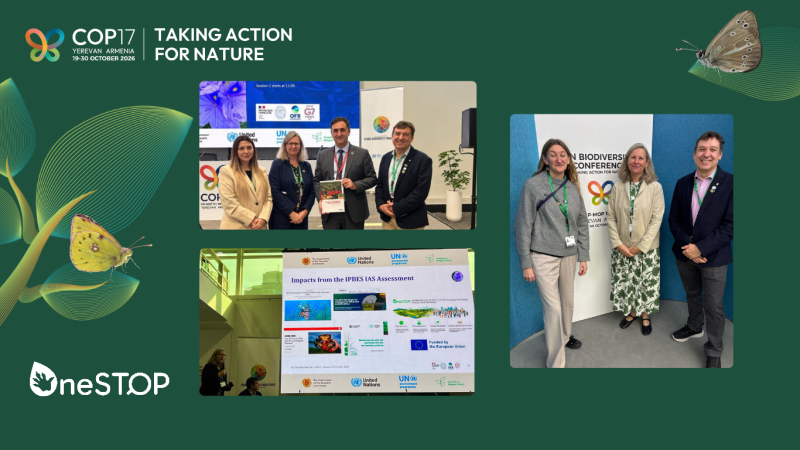
On 21 October, Helen Roy chaired the launch event of the first IUCN global strategy on invasive alien species. This document sets out four expected outcomes for 2036:
- generating accessible data, science, tools and technology to drive action;
- increasing capacity across governments, civil society and the private sector;
- scaling up effective prevention, early detection, rapid response, eradication, control and restoration measures;
- mobilising and increasing sustainable finance to support the prevention and management of IAS, as well as ecosystem restoration.
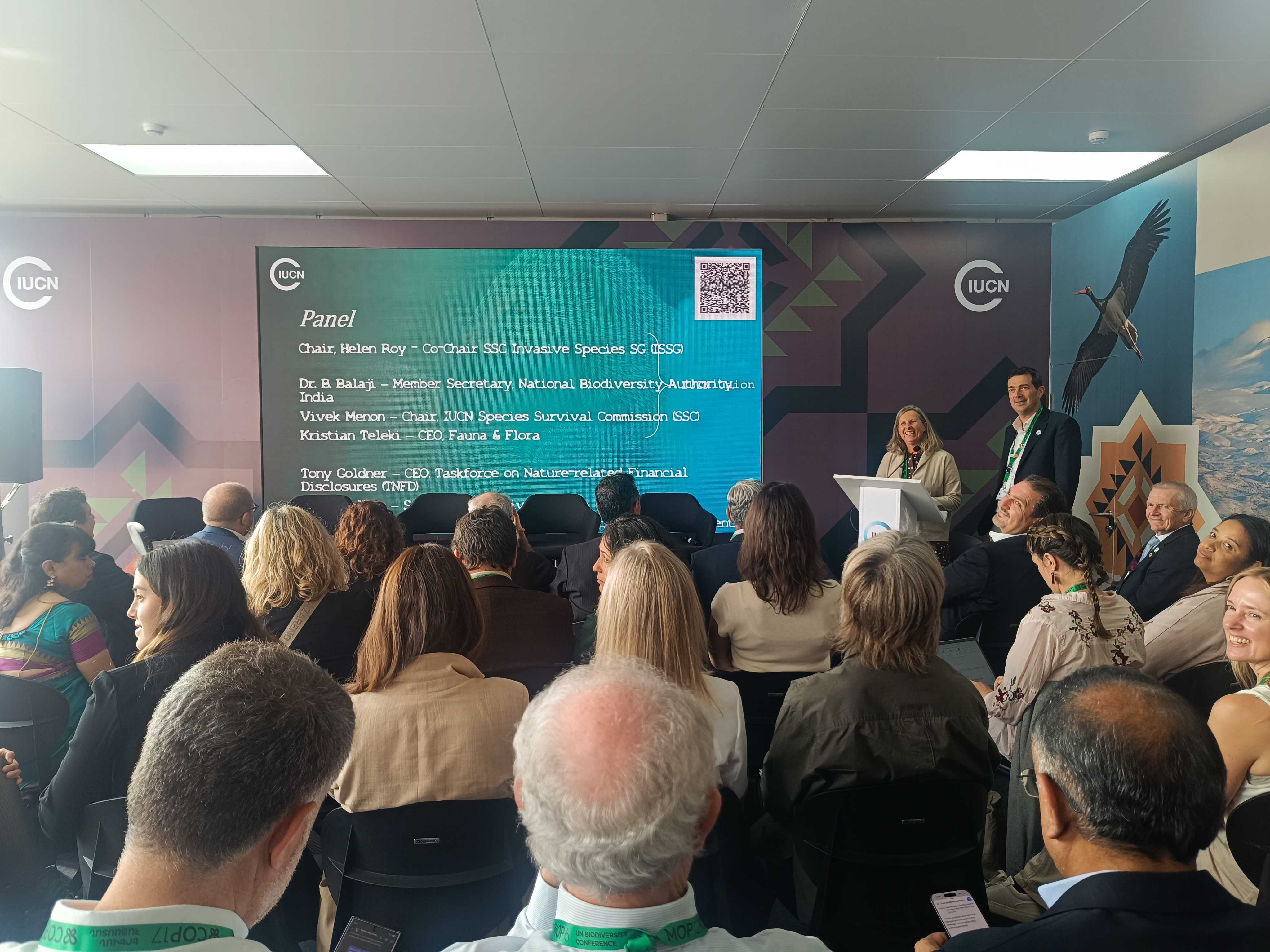
Helen Roy chairing the session launching the IUCN global strategy on IAS
Bringing integrated biosecurity into the policy discussion
During the event, the draft decision on invasive alien species of the Chair of Working Group II to CBD was also discussed. It encourages countries and other stakeholders to:
- improve the collection and sharing of data on IAS impacts, occurrences, management measures and pathways of introduction and spread, including international and online trade;
- use integrated, collaborative approaches that bring sectors together, including the private sector;
- strengthen cross-sectoral and cross-border collaboration, including through the One Health approach and the Global Action Plan on Biodiversity and Health.
These priorities closely match OneSTOP’s integrated One Biosecurity approach, which Helen Roy presented at two events:
- Protecting Pollinator Health: how governments can mitigate invasive species (22 October), where she highlighted that as pollinators face pressure from invasive predators, competitors and pathogens, early detection and joined-up biosecurity approaches used by OneSTOP are extremely important;
- G7 event hosted by France during IAS half-day (24 October), where she presented OneSTOP and its One Biosecurity approach.
Sharing OneSTOP’s policy recommendations
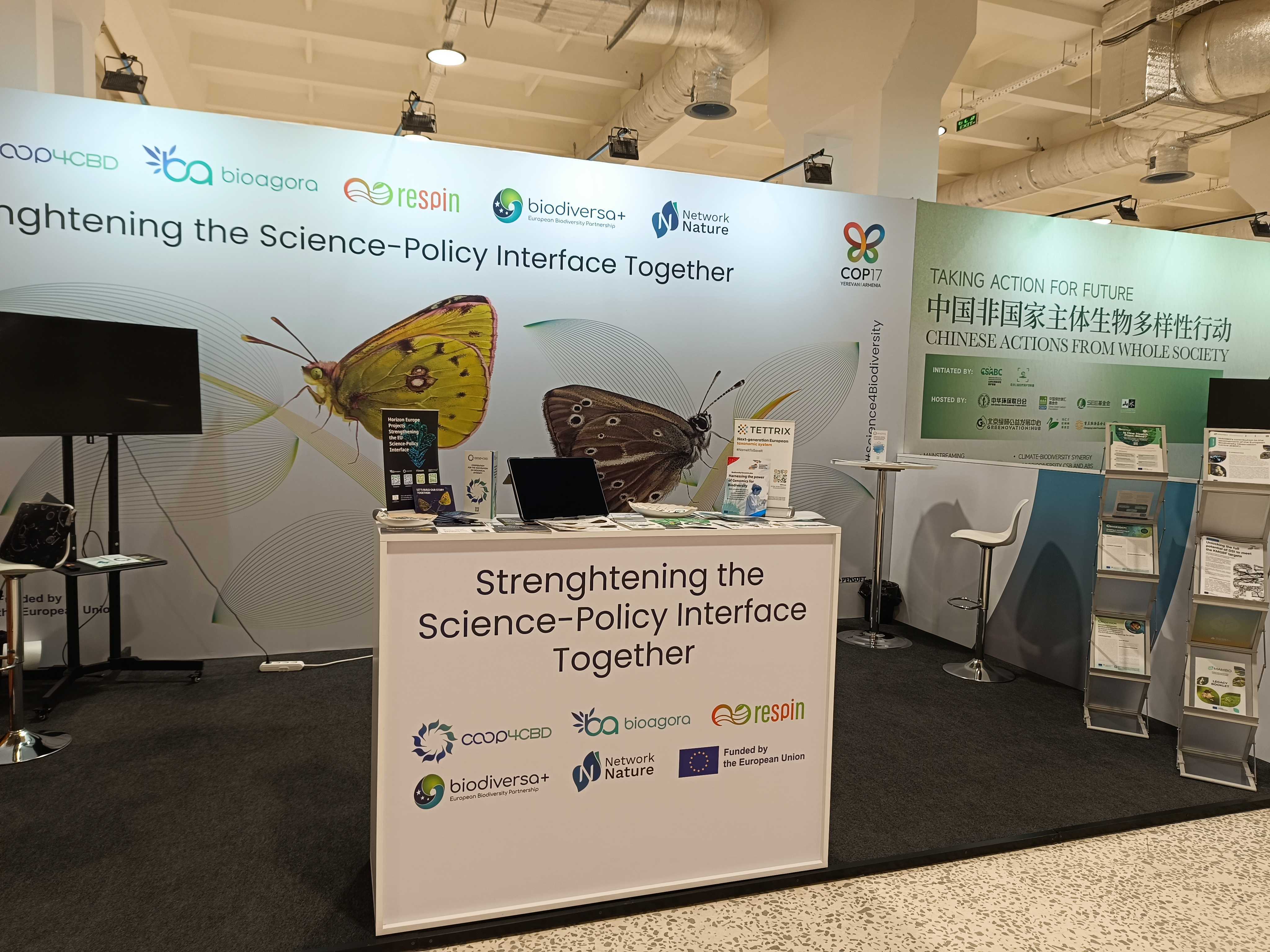
EU Science for Biodiversity booth where OneSTOP materials were showcased
In addition, COP17 participants could get familiar with OneSTOP’s policy briefs on different aspects of IAS management at the EU Science for Biodiversity Booth. The booth was hosted by CO-OP4CBD, BioAgora, RESPIN, Biosiversa + and NetworkNature, and it was the main platform for the exhibition of EU-funded biodiversity projects and the exchange of views and knowledge between their partners.