Introducing the OneSTOP Living Labs
Authored by Helen Bayliss from Coventry University.
The Living Labs approach in OneSTOP
OneSTOP is pioneering a joined-up approach to minimise the introduction, establishment, spread and impact of terrestrial invasive alien species (IAS). At the heart of this approach are five European Living Labs: real-world innovation ecosystems comprising a range of stakeholders with an interest in IAS detection and management, working together to test technologies and innovations within their local region. The OneSTOP Living Labs are being established in Belgium, Finland, Romania, Portugal and the UK, representing a range of the climatic and socio-ecological conditions found across Europe. Each Living Lab has a core Learning Community of representatives from 8-12 relevant organisations who help guide activities, and a wider network of stakeholders involved with specific tasks or sites.
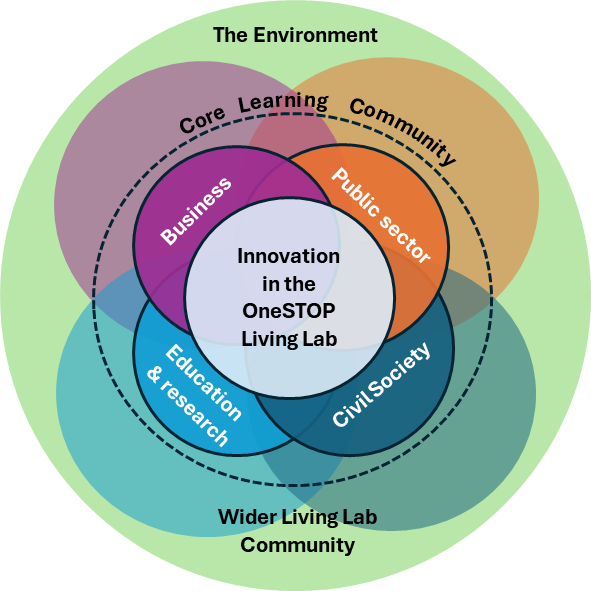
Innovation at the heart of the Living Labs approach
Establishment of the Living Labs
In early 2025, OneSTOP consortium partners in each of the five countries identified relevant organisations with an active interest in IAS management in their Living Lab region. These organisations represent a range of sectors, including civil society, businesses, research and education and the public sector. Representatives from the organisations identified by this stakeholder mapping process, and also additional actors identified via an accompanying snowball sampling approach, were invited to attend a meeting to learn more about the Living Labs, and to participate in the core Learning Community, guiding the work of their local Living Lab going forward.
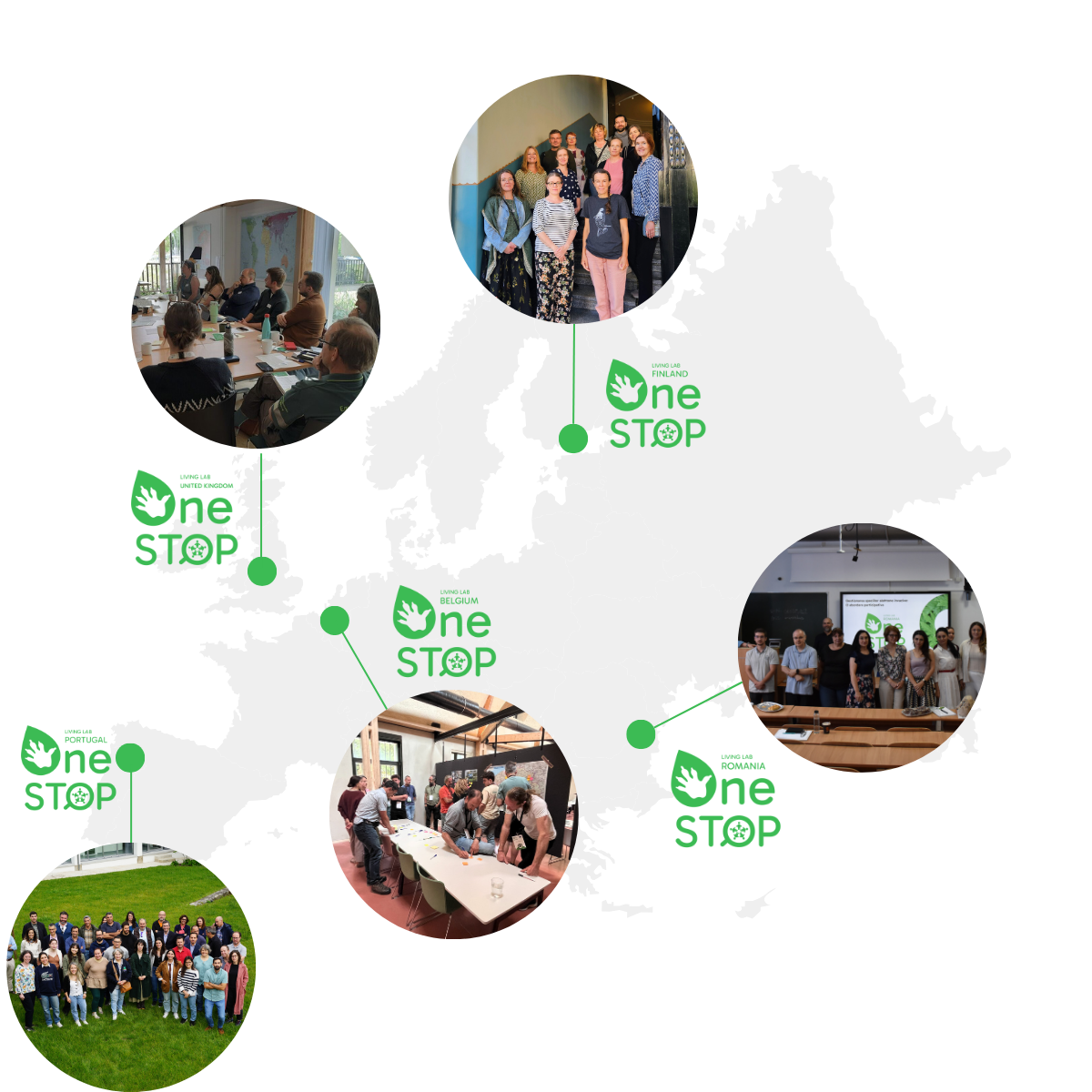
OneSTOP's 5 Living Labs
All five Living Labs held their first in-person meetings during the summer of 2025, and three have now held second meetings to begin planning their activities for the coming year. Each of the Living Labs has arranged a unique programme of talks, workshops and demonstrations. These relate to the technologies to be tested within the OneSTOP project, the sites and species of local interest to focus on, the potential for gardeners as citizen scientists to identify different groups of emerging invasive species, and other technologies, including drones, spatial models and generative AI.
Initial testing of the technologies
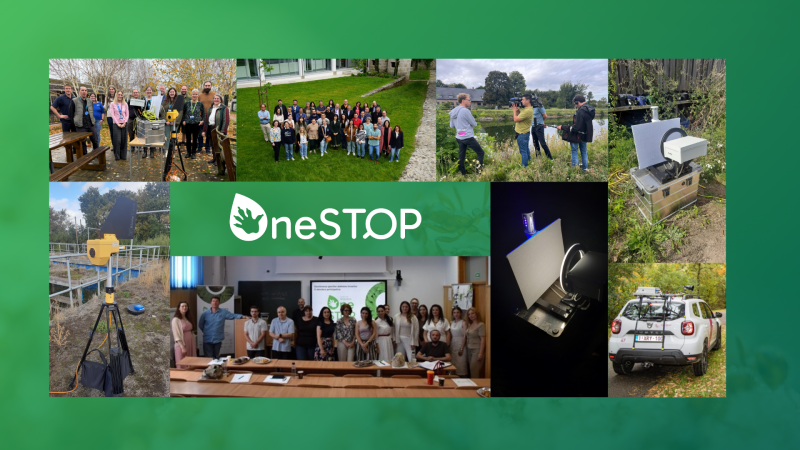
During the summer and autumn of 2025, the Living Labs began to test some of the technologies and innovations within the OneSTOP project. The Living Labs in Romania and Portugal have received OneSTOP CamAlien vehicle-mounted cameras, which use computer learning and artificial intelligence to process and identify images of invasive plants or roadkill animals captured alongside roads and waterways. The Belgian Living Lab has had the opportunity to test an additional CamAlien unit through the Biodiversa+ project. The CamAliens have proven to be of great interest to stakeholders and the media.
The Living Labs in Belgium, Finland and the UK have been testing automated monitoring of insect (AMI) traps, which use a UV lure to attract night-flying insects to a white screen facing a camera. Captured images are then classified by AI to taxon, and moths to species level where possible. The Living Labs have been testing these in different environments and with moth experts to provide an initial evaluation of their utility.
The UK Living Lab received two BiotaTrace airDNA samplers from Platform Kinetic and has been testing different sampling methods. Initial samples are currently being processed by UKCEH, with the results hopefully informing the airDNA sampling strategy for the 2026 field season.
The Living Labs have also contributed to other aspects of the OneSTOP project by providing locally relevant species suggestions, both for a public questionnaire on perceptions of IAS conducted across the five Living Lab countries, and for modelling potential distributions of species of local concern under different future climate scenarios.
Plans for the future
For 2026, all Living Labs will have an AMI Trap for monitoring insects and airDNA samplers to deploy within their region. The two OneSTOP CamAlien units will be shared, ensuring every Living Lab gets the opportunity to test them. The Living Labs will also be testing the ‘gardens as sentinels’ approach to engage gardener citizen scientists in spotting emerging invasive plants and invertebrate species.
The Living Labs will evaluate the technologies and innovations they are testing to provide real-world feedback on both their utility and on the results generated. They will also contribute to other aspects of the OneSTOP project, including scenario-based workshops testing the proposed alert system, and will have the opportunity to build on the results of the public survey, modelling exercise and other work packages within OneSTOP with relevance at a local level.