Highlights from NeoBiota 2026: Talking about Europe's Invasive Species Response
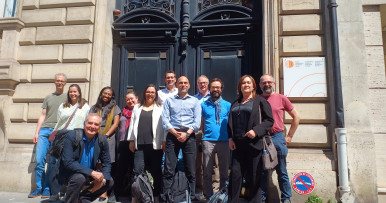
OneSTOP took part in the 14th International Conference on Biological Invasions (NeoBiota 2026) in Brussels, Belgium, between 7 and 11 September 2026. The event brought together some 320 researchers, practitioners, policymakers and stakeholders to share cutting-edge research on biological invasions.
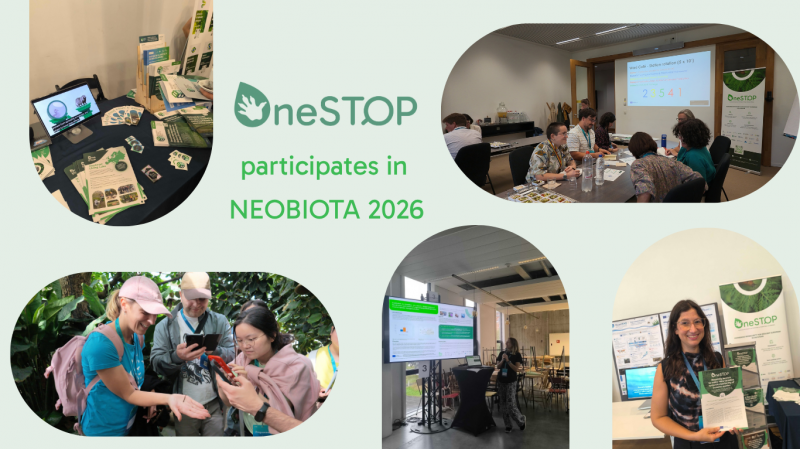
OneSTOP’s booth
During the event, OneSTOP hosted a booth with Pensoft Publishers, where participants could pick up our latest promotional materials, such as our policy brief examining why researchers' access to social media, search engine and e-commerce data is collapsing at precisely the moment invasion science needs it most.
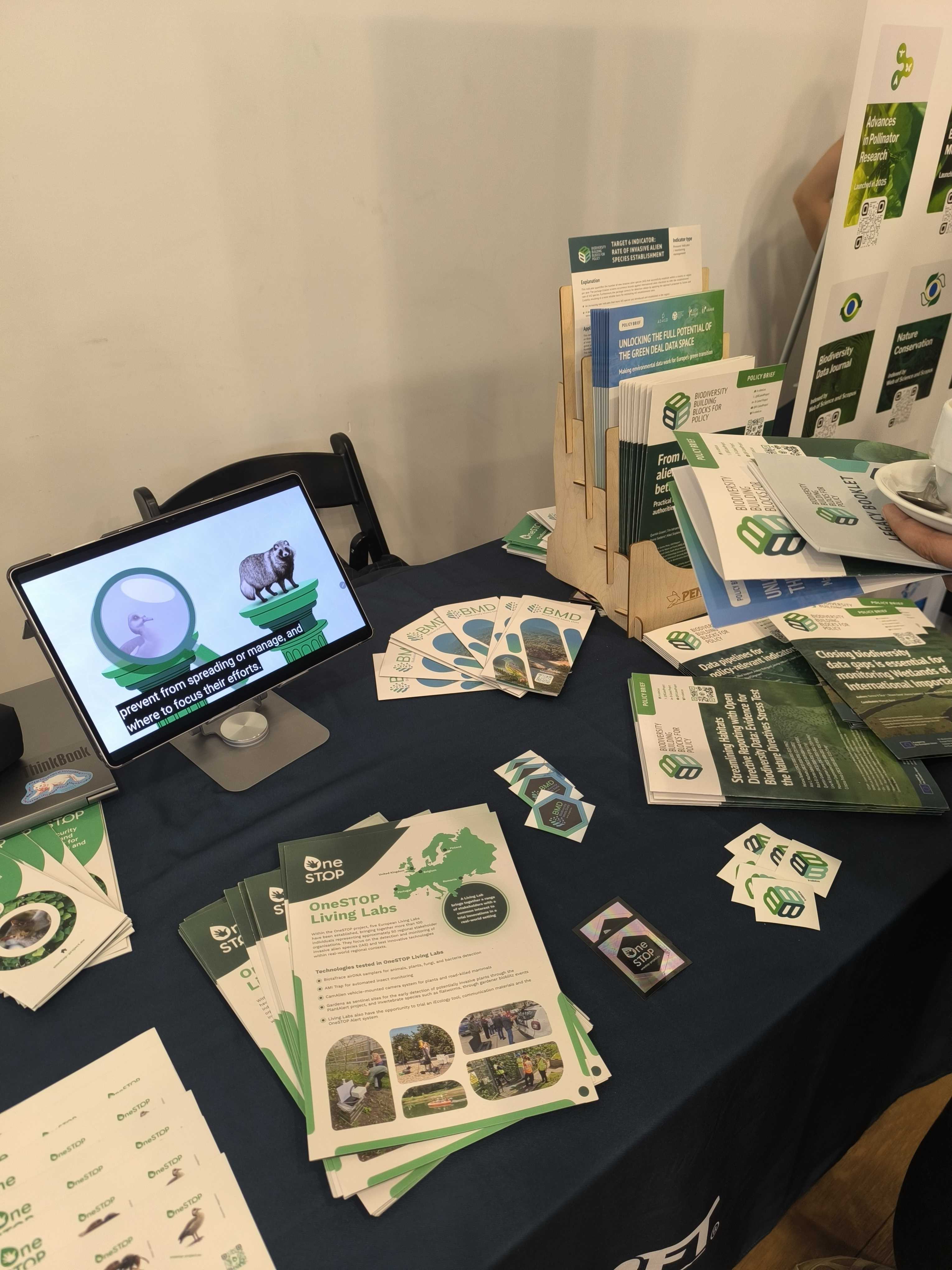 OneSTOP's booth at Neobiota
Presentations
OneSTOP was featured in numerous presentations, with key sessions focusing on the project’s work on prioritisation, dissemination and socio-political work.
Our prioritisation work was highlighted during Joana Vicente’s keynote, Prioritisation in the Age of Invasion Science: From Risk Ranking to Adaptive Governance. She argued that prioritisation should be an ongoing, adaptive process built into how invasions are governed, rather than a one-off ranking by risk. Joana also presented the progress on the upcoming Invaders Toolbox, developed by OneSTOP. Later, Eva Malta-Pinto, in the session Integrative Approaches for Effective Management, showed how digital decision-support tools turn invasive species data into actual decisions by referring to OneSTOP’s species distribution models (SDM) gallery. Bernd Lenzner continued the topic of modelling in the session General Contributions by discussing how model-based scenarios of biological invasion reveal plausible futures across social-ecological systems.
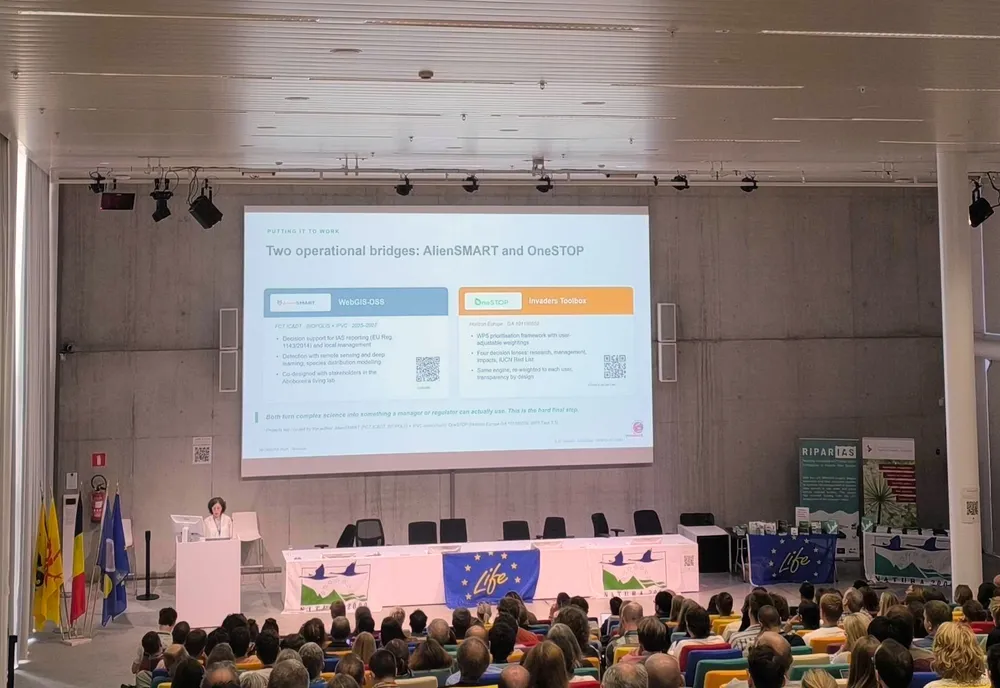
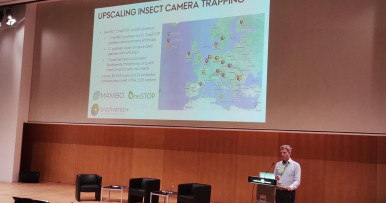
Joana Vicente's keynote on Prioritisation in the Age of Invasion Science: From Risk Ranking to Adaptive Governance
OneSTOP’s dissemination pillar was featured in Quentin Groom’s flash talk on building a cross-realm European alert system for invasive alien species. He showcased OneSTOP’s progress in creating such a system and showed its demo version. Moreover, Lien Reyserhove, in the session Workflows in support of research and management, explained OneSTOP's approach to making national checklists open, transparent and scalable, showing the updated national checklist for invasive and introduced species for Belgium.
In addition, OneSTOP’s work on socio-political action was also presented in Tamara Kovács’s talk in the session Human Dimension of IAS, where she presented the results from OneSTOP's survey on how the public perceives invasive species and which management options people are willing to support.
During the conference, OneSTOP also organised a stakeholder workshop, where some of the project results were discussed in a World Café format. Stakeholders held discussions with project partners working on specific tasks such as SDMs, prioritisation framework for IAS, data-driven horizon scanning, prioritisation maps for Red List species protection and SDM under environmental change scenarios. The discussions were guided by five infographics presenting each of the topics. More information about the policy event will be shared soon.