BioBlitzes and detection technologies testing: How OneSTOP Living Labs engage citizens and help monitor IAS
Authored by Helen Bayliss from Coventry University, Laura Abraham from Meise Botanic Garden, Cândida Gomes Vale from BIOPOLIS-CIBIO, Heidi Blom and Miia Jauni from LUKE, Cristina Preda from Ovidius University of Constanța.
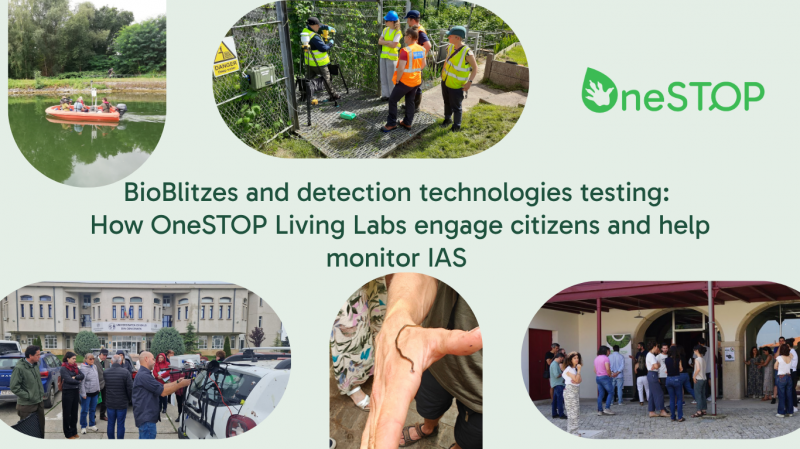
A year and a half into the project, our five OneSTOP Living Labs have been busy testing detection technologies and organising bioblitz events to detect invasive species in their local areas.
Testing Technologies
Each of the Living Labs has co-deployed an AMI trap for the automated monitoring of nocturnal insects alongside a custom-built airDNA sampler and weather station from Platform Kinetics. The equipment will run at the five sites for approximately 20 weeks, allowing field testing of the technologies and sampling of the species present from a range of habitats and climatic conditions across Europe. Individual Living Labs are organising visits for their wider Living Lab communities to view the equipment in action. This trial builds on successful testing conducted by the Living Labs last summer and features upgraded equipment and standardised collection of weather data.
In addition to the co-location trial, all of the Living Labs now have a vehicle-mounted CamAlien for mapping invasive alien plant species alongside roads and rivers. CamAlien is a smart camera mounted on a vehicle, which takes thousands of photos during drives and automatically links them to GPS coordinates. Using AI, the system recognises invasive plant species that pose a threat to local biodiversity. Each of the teams has identified a list of species of interest for their area, and different Living Lab members from a range of organisations will be travelling along routes of interest to capture images of any invasives present.
BioBlitz events
Throughout 2026, the Living Labs have also been organising a range of events to promote the OneSTOP PlantAlert app and the recording of invasive species using iNaturalist. The app allows you to identify plants with PlantNet, submit your observations to iNaturalist, and answer a few questions about how these plants behave in your garden.
The focus of most of the BioBlitz events was flatworms, e.g. Obama nungara, an invasive land species that poses a significant ecological threat.
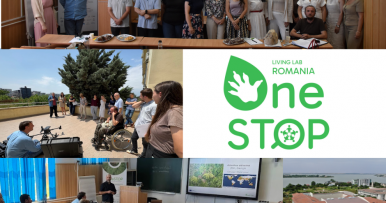
In Portugal, an interactive citizen science event focused on these silent invaders was held during the Iberian Week of Invasive Species (23-31 May 2026), which helped increase its impact and reach greater public awareness. During the event, the OneSTOP team trained stakeholders on how to use iNaturalist to identify and report invasive species observations. Researcher Sónia Ferreira also gave a presentation on invasive flatworms and showed participants how to identify and detect them in the field.
In Romania, our Living Lab organised an in-person BioBlitz event in Constanța on 23 May 2026, aiming to build a community of citizen scientists to help conserve biodiversity by recording species of interest. The event focused on detection and monitoring of invasive alien species, using the flatworm Obama nungara as an example. All species sightings were gathered in a dedicated project created in iNaturalist. The OneSTOP Romanian team promoted the activity simultaneously from Bucharest and Focșani, and used the snowball technique so that the initial meeting was followed by observations recorded across the country by willing participants. Another in-person meeting, which will be held within a summer school organised by Ovidius University of Constanța in collaboration with the University of Bucharest, took place in 16 July in Constanța.
Later, on 6 June, our Living Lab in Finland organised a 24-hour BioBlitz with a dedicated project created in iNaturalist. The BioBlitz recorded observations of a total of 414 species from the area. The event was organised by Träskändan kartanon ystävät ry ("Friends of Träskända Manor Association") and Espoon ympäristöyhdistys ry ("Espoo Environmental Association") together with partners and experts. During the event, OneSTOP partners provided information on IAS in Finland, with a particular focus on the Spanish slug (Arion vulgaris), which is already widespread in Finland, and the flatworm Obama nungara, which was first recorded in Finland in 2025.
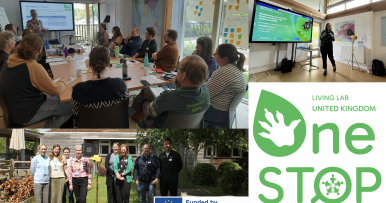
In parallel, members of the UK Living Lab organised a range of BioBlitz events as part of the iNaturalist City Nature Challenge in April. Moreover, on 17 June, Katharina Dehnen-Schmutz and Helen Bayliss (Coventry University) attended the 22nd Non Native Species Stakeholder Forum in Bristol and displayed posters and fliers on the OneSTOP Living Labs and the PlantAlert app. The UK Living Lab’s outreach efforts extended into Invasive Species Week (22-28 June 2026), where OneSTOP was also displayed, and Katharina Dehnen-Schmutz gave a free public webinar ‘Using citizen science to prevent future spread of invasive non-native plants’. The webinar introduced the OneSTOP PlantAlert app and encouraged people to get involved and record any problematic ornamental plants spreading in their gardens. You can watch a recording here.
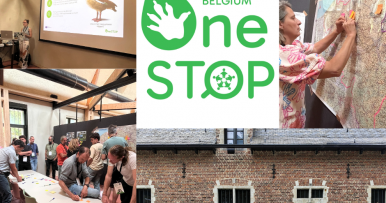
Our Belgian Living Lab also took part in Invasive Species Week (22-28 June 2026), bringing together researchers, practitioners, and local authorities to discuss how to improve early detection and management of invasive alien species. As part of the activities, a BioBlitz was organised with materials from FlatwormWatch, a citizen science initiative focused on early detection of invasive flatworms in Belgium. As part of the event, participants had the opportunity to get familiar with different materials for spotting and identifying flatworms.
Getting involved
The OneSTOP PlantAlert app is available for anyone who would like to report an ornamental plant spreading out of control in their garden here. The app is currently available in the languages of the Living Lab countries (Belgium, Finland, Portugal, Romania and the UK), but more languages may become available. For any other sightings of invasive or native species, you can record them on iNaturalist, where the community can verify your record and the data will be made available via the Global Biodiversity Information Facility (GBIF) to help inform policy and practice.